
Miami-Dade Released Mugshot Records
A booking photograph records appearance during one custody episode. MDCR creates county jail images, while FDC photos belong to state corrections records. The images can differ in date and setting. Florida public access is broad but subject to exemptions, redaction, sealing, and expunction. Public availability does not make a photograph proof of guilt or current status.
Miami-Dade's current-custody description says a live result includes a mugshot. The county does not promise the photo remains on every released result in the rolling 72-hour option. Once the public card expires, request the image from the custodian rather than assuming it was destroyed.
Miami-Dade Released Mugshot Channels
The best channel follows the agency that made or keeps the image. County jail, state prison, and registration photos serve different records. A media image may add event context but is not a systematic custody source.
| Channel | Photo? | Access |
|---|---|---|
| MDCR current search | Documented for current custody | Official MDCR search |
| MDCR 72-hour option | Not promised on every card | Check recent entry, then request |
| MDCR Central Records | Requestable by booking | Give jail number and booking date |
| FDC Release Information | Yes | Search by DC number or name |
| FDLE registry | For registrants only | Use only when registration applies |
| Official case notice | Sometimes | Read the issuing agency context |
Miami-Dade Has No Mugshot App
No official MDCR or Miami-Dade Sheriff mobile app was found that supplies an inmate, recent-release, or mugshot feed. The Sheriff's Community on Patrol app is a community reporting product, not an inmate locator. Mobile access to the official web search and VINE notices are the documented alternatives.
The MDCR search description lists a mugshot among current result fields. A missing current roster entry does not prove release. Use the released-within-72-hours option, the release transaction, or VINE to confirm status before interpreting a photograph.
Request Miami-Dade Booking Photos
The MDCR records portal accepts corrections requests and tracks status. Ask for an existing image tied to one booking. An arrest report may belong to MDSO or municipal police, while the jail photograph belongs with MDCR.
- Give the full name, date of birth, and jail number when known.
- State the booking date or facts that identify the episode.
- Ask for the photograph and matching booking and release transaction.
- Request release date, time, type, authority, and transfer destination if nonexempt.
- Ask for an estimate because research, copies, color, or certification can add cost.
The official request page shows this channel.
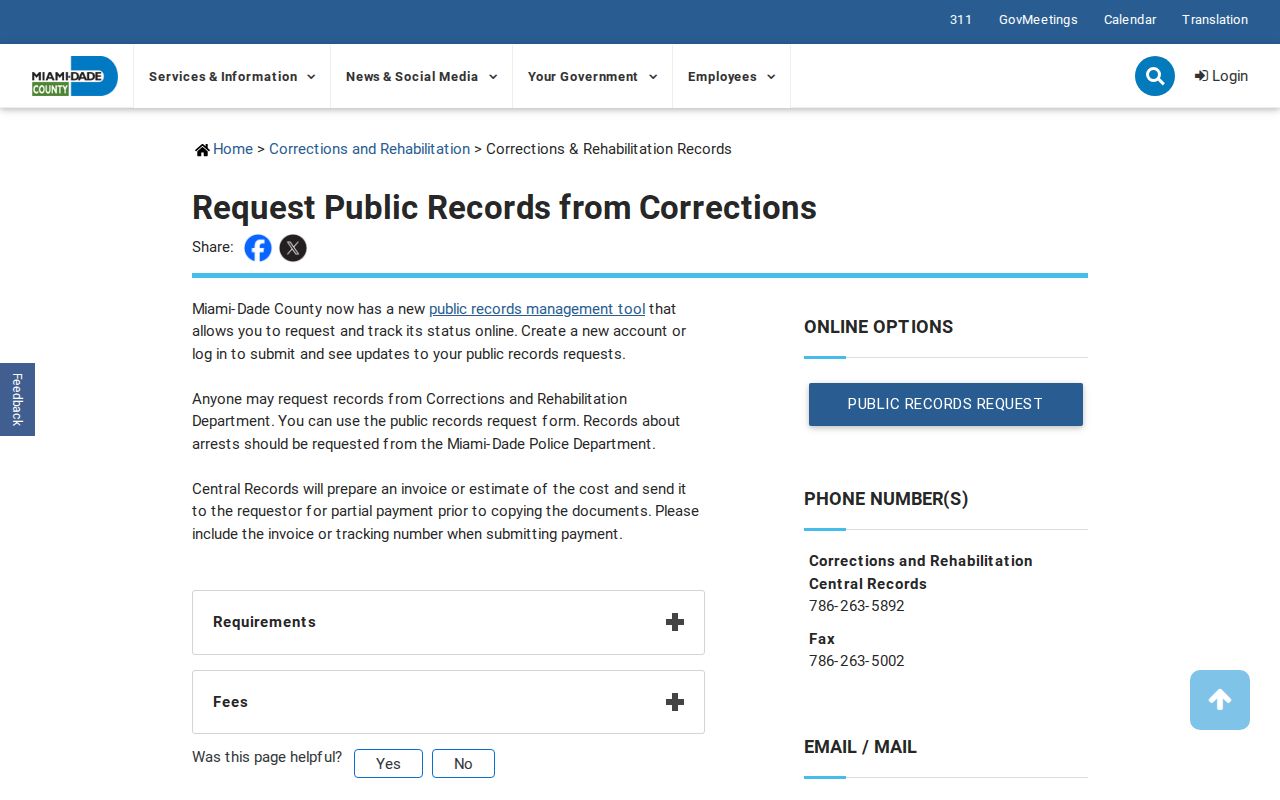
A precise request helps Central Records return the image with the right custody episode.
MDCR Central Records2525 NW 62nd Street, Suite 4200
Miami, FL 33147
786-263-5892
Fax: 786-263-5002
Published standard charges include 15 cents for a one-sided page, 20 cents double-sided, and one dollar per certified or color page. Work over 20 minutes may add a labor charge, and advance partial payment may be required. MDCR makes no blanket turnaround promise.
Miami-Dade Official News Images
MDSO, municipal police, prosecutors, or local news may publish an arrest image in a case-specific report. Read the original context and verify release independently. An event story is not a full booking archive, and an old image says nothing by itself about present custody.
Commercial photo aggregators may mirror old images with stale dates or status. They are not proof of custody and are not linked or endorsed. The government record, court docket, and official request provide the stronger chain.
Florida Mugshot Removal Law
Florida Statutes §901.43 applies to covered booking-photo publishers. Such a publisher may not solicit or accept a removal fee. The person shown, or a legal representative, may send a registered-mail request identifying the photo with enough proof of identity. A covered publisher must remove it without charge within ten calendar days and may not republish it. The law has conditions and exceptions. It does not make every government image secret.
Sealing or expunction is a separate process. FDLE says an eligibility certificate alone does not hide the record. A court must enter an order, and FDLE must receive the certified order. Miami-Dade's State Attorney offers a Second Chance route for some potentially eligible state cases, but eligibility depends on the offense and history.
Miami-Dade State Release Photos
For a person released from Florida state prison, use FDC Inmate Release Information. FDC says this database includes photographs and updates nightly. Match the DC number, identity details, Release Date, and Date Out-Custody. The FDC image is a state corrections photo, not necessarily the Miami-Dade booking image.
The FDLE registry displays photos for people subject to registration. It is not a general released-inmate archive. Absence says nothing about a person who has no registration duty.
The official registry screen illustrates the narrow filters and photo option.
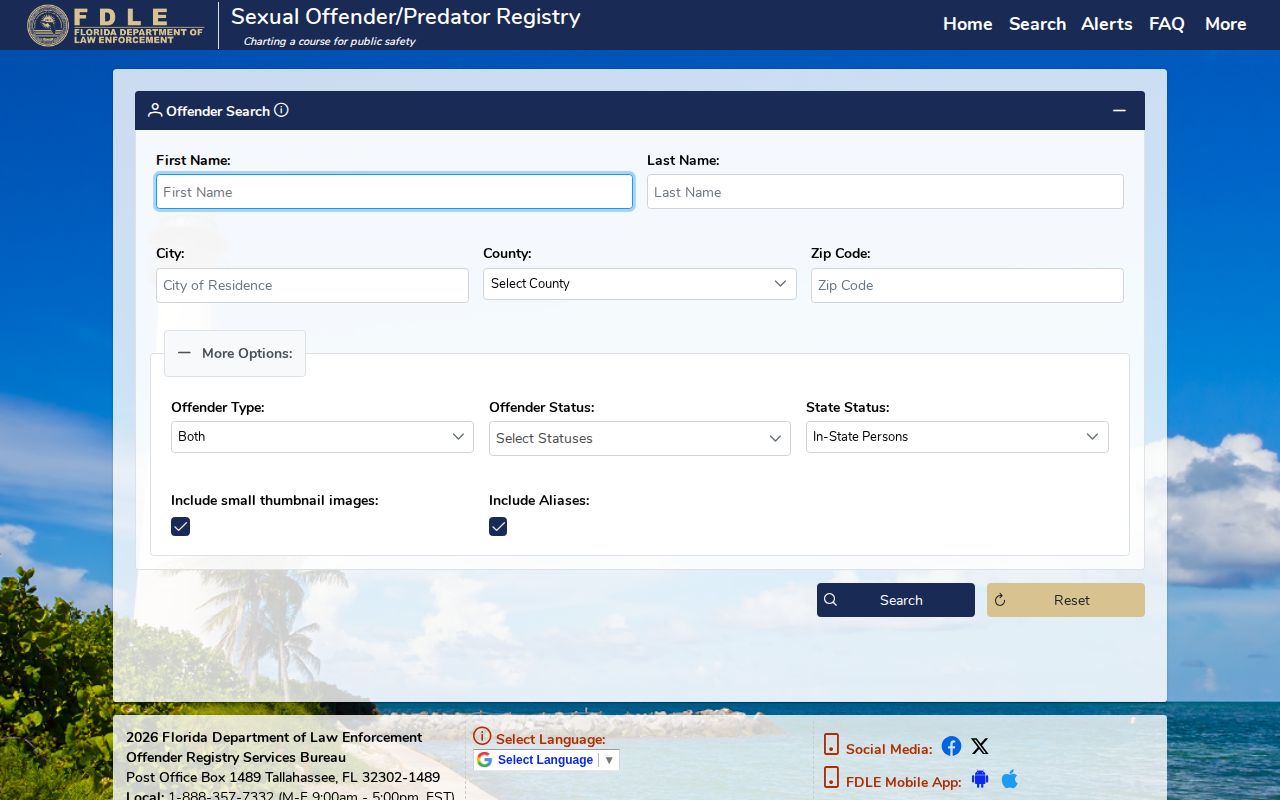
Those registration-specific categories must not be treated as a general Miami-Dade release list.
Verify Miami-Dade Mugshot Context
Pair the image with the jail number, booking date, and release transaction. Then use the Miami-Dade Clerk case to read bond, dismissal, sentence, probation, or another disposition. A photo tied to arrest cannot show whether charges led to conviction. It also cannot show whether MDCR released the person to the community or transferred the person to FDC, ICE, federal custody, or another county.
The Miami-Dade release-record path covers the full custody and court chain. Preserve the identifying number because repeated names and separate booking episodes can otherwise attach the wrong image to the wrong event. Note: VINE is a status and notification system, not a source for republishing booking photographs.
Match Miami-Dade Booking Episodes
A booking photograph belongs to an episode, not just a name. Record the MDCR jail number, booking date and time, date of birth, charge list, and facility before requesting an image. A later arrest can create a new photo and booking number for the same person. An alias or shared name can also return the wrong person. The identifiers keep the image tied to the right event.
The release transaction answers questions the photo cannot. It can state effective date and time, authority or disposition, and a transfer destination or hold when nonexempt. The Clerk docket supplies the judicial act. A bond, probation, dismissal, or time-served entry adds legal context but may not state when MDCR finished processing.
For a state-prison image, use the DC number and FDC history. A county jail number and state DC number are not interchangeable. The FDC image may have been made long after the Miami-Dade booking photograph. Both can depict separate custody stages.
Miami-Dade Mugshot Public Access
Florida public-records law permits access to nonexempt records, but it does not require a permanent online gallery. MDCR can remove a short-lived web card while retaining an agency record under its schedule. Ask the custodian to search the identified booking episode and provide nonexempt portions, with protected details redacted.
Juvenile material, sealed or expunged histories, protected victim information, active-investigation information, and some personal or corrections-security data may be restricted. If MDCR withholds a record, ask for the statutory basis and the remainder. A missing photograph is not proof that no booking occurred.
Sealing and expunction affect access only after the full process. FDLE's eligibility certificate is one step. The court must enter an order, and FDLE must receive the certified order. Obtain needed personal copies before access changes, while recognizing that eligibility depends on the case.
Mugshots Do Not Prove Release
A current MDCR result may include a mugshot because the person remains associated with county custody. An FDC released record can retain a photo after state custody ends. An FDLE registry image can remain because of a registration duty. These appearances have different meanings. The image does not identify present custody.
Use MDCR's 72-hour option for a recent county event, then request the transaction after the card expires. Use FDC Release Information for a state-prison exit and Supervised Population for later oversight. Use the registry only when a registration duty applies. An official news image should be read with its dated context and checked against agency records.
Commercial copies may preserve stale status or omit corrections. Their age and source can be hard to establish. The safer chain is the originating photograph, booking identifier, release transaction, and court record. That sequence keeps a past arrest image from being presented as a current custody fact.
Label a photograph by source. An MDCR image documents a county booking. An FDC photo belongs to a state corrections file. An FDLE image appears because a registration record applies. Keeping the agency and date with the image prevents one custody stage from being confused with another. If the source cannot be identified, return to the official record instead of relying on the copy.
VINE adds custody and notification information, not an official photo archive. A VINE alert can help time a separate MDCR or FDC record check, but it should not be used to label an image as current. Match the booking or DC number first, then obtain the agency record that states when custody ended and what happened next.