
Miami-Dade VINELink Release Coverage
Florida uses VINE and VINELink statewide. Miami-Dade participates through MDCR, and the official county victim-support page says anyone may check custody information or register confidentially at no charge. Florida county jails, the Florida Department of Corrections, and the Department of Juvenile Justice feed the service. The result is a notification layer across more than one state or local custody system.
VINE reports status changes from the participating agency. Florida's documented events include release, transfer, escape, death, and out-to-court. A released or out-of-custody status is useful evidence that the reporting agency changed its record. It does not automatically say whether the person returned to the community or moved to another authority. An MDCR release to FDC or ICE, for example, ends county custody but does not end all custody.
BOP and ICE do not use Florida VINE as their locator. Search federal BOP custody in the BOP Inmate Locator and immigration detention in ICE ODLS. County-only detainees also do not gain an FDC prison record merely because their case arose in Miami-Dade.
Search Miami-Dade Inmates on VINELink
Begin with the person search and choose Florida. Use the strongest identifier available, then compare the reporting agency and identity details before opening a result. A common name may return more than one record. Do not select an entry only because Miami-Dade appears elsewhere in the case history.
- Open the VINELink person search and select Florida as the state.
- Enter the person's name or available identifier. Check spelling and known aliases if no clear result appears.
- Compare each result's identifying details and reporting agency. Choose the MDCR or FDC record that matches the known custody path.
- Open the record and read the custody status, agency, location information, and status-change event as a set.
- Contact the reporting agency when the result says released or out of custody but does not explain the destination.
Use a DC number for an FDC record when it is known. For a county booking, retain the MDCR jail or booking number for direct confirmation. If VINELink has no match, the complete county, state, federal, immigration, and court fallback sequence appears in the Miami-Dade released-inmate search.
The VINELink service is the source of the Florida people-search screen captured below.
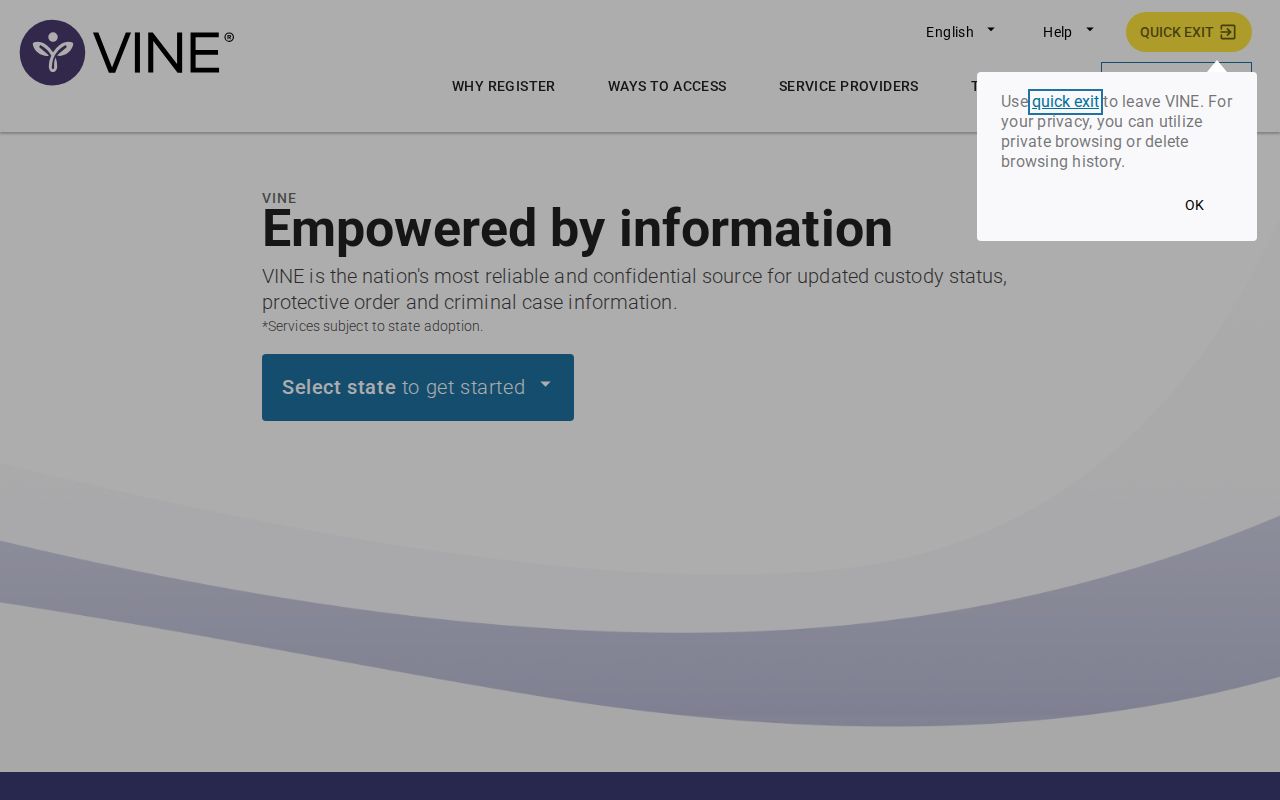
The screen helps start a one-person check. A matching record still depends on correct identity and agency details.
Miami-Dade VINELink Release Fields
VINELink is designed for status and notice, not for certified records. The available details vary with the agency feed. A user should expect to compare identity and agency information, then read custody status and the reported event. A scheduled date, if present for a sentenced person, is different from an actual release notice.
| VINELink field | What it can establish |
|---|---|
| Name and available identifiers | Help distinguish the subject from other people with the same or similar name. |
| Reporting agency | Identifies which jail or corrections system supplied the status. |
| Custody status | Shows the agency's current reported state, such as in custody or out of custody. |
| Facility or location | Provides custody context, but may not explain a later transfer destination. |
| Status-change event | Can trigger a release, transfer, escape, death, or out-to-court notice. |
| Scheduled or actual date, if supplied | Must be read by label. A future estimate is not proof of completed release. |
A Miami-Dade out-of-custody event should lead back to MDCR when the person was in county jail. Ask for the effective release time, authority, and destination. An FDC event should be checked in Inmate Release Information and, when relevant, the Supervised Population search. The Miami-Dade Clerk case search can add the court action behind a county change. Physical prison release can occur while legal supervision continues.
Note: VINELink relays participating-agency data and is not a permanent certified Miami-Dade release instrument.
Register Miami-Dade Release Notifications
Registration begins from the correctly matched person record. Add a direct phone, text, or email channel and complete the confirmation. The contact details are confidential, and the person being tracked is not given the registration information. A switchboard number is a poor choice because the alert may require a personal response.
- Open the matching MDCR or FDC record and choose the notification option.
- Select telephone, text, email, or the available combination that reaches the registrant directly.
- Enter the contact information and finish the service's confirmation prompts.
- For telephone alerts, choose a four-digit PIN. Florida's form says the default is the last four phone digits if no PIN is selected.
- Use the PIN to acknowledge a phone call. Calls repeat until acknowledged, while text and email notices do not repeat.
Florida VINE's phone line is 1-877-846-3435 and operates around the clock. FDC Victim Services is available at 1-877-884-2846 from 8 a.m. to 5 p.m. Eastern, Monday through Friday. Those channels support registration, but the custody agency remains the source for the actual record.
Confirm Miami-Dade VINELink Releases
The confirming office depends on the agency shown. For an MDCR event, use the official corrections contacts to reach Inmate Information at 786-263-7000 or Release at 786-263-5360. A detailed or archived check should request the booking and release transaction from MDCR Central Records. The Miami-Dade Clerk docket may show the bond action, dismissal, probation order, sentence, or court release order behind the custody change.
For a state prisoner, use FDC Inmate Release Information and read Release Date with Date Out-Custody. Then check Supervised Population because release from prison and termination of supervision are distinct events. Federal BOP results use a release date and Released or no-facility status. ICE results have their own 60-day released-person coverage. Neither federal system is supplied by Florida VINE.
| Custody path | Confirmation source |
|---|---|
| Miami-Dade county jail | MDCR Release, the agency release transaction, and the Clerk case record. |
| Florida state prison | FDC Inmate Release Information plus Supervised Population. |
| Federal BOP custody | BOP Inmate Locator and the federal court record. |
| ICE detention | ICE ODLS, ERO documentation, and immigration-court status. |
Manage Miami-Dade VINE Registrations
Miami-Dade adds a local Victim Support Services layer to the statewide service. From the county VINE page, choose Florida, select Look Up Registrations, and continue. Enter the phone number or email tied to the registration. Then choose English or Spanish for the access code, request it, and enter the six-digit code within 30 minutes.
This local path helps manage an existing registration without repeating a generic person search. The county also distinguishes electronic notices from certified-mail notification and provides Haitian Creole phone help through the Florida VINE line. Technical support is available at 1-866-277-7477, option 2. Miami-Dade Victim Support Services can be reached at 786-263-6318.
The official Miami-Dade Victim Support page is the source for the locally captured registration and VINE instructions.
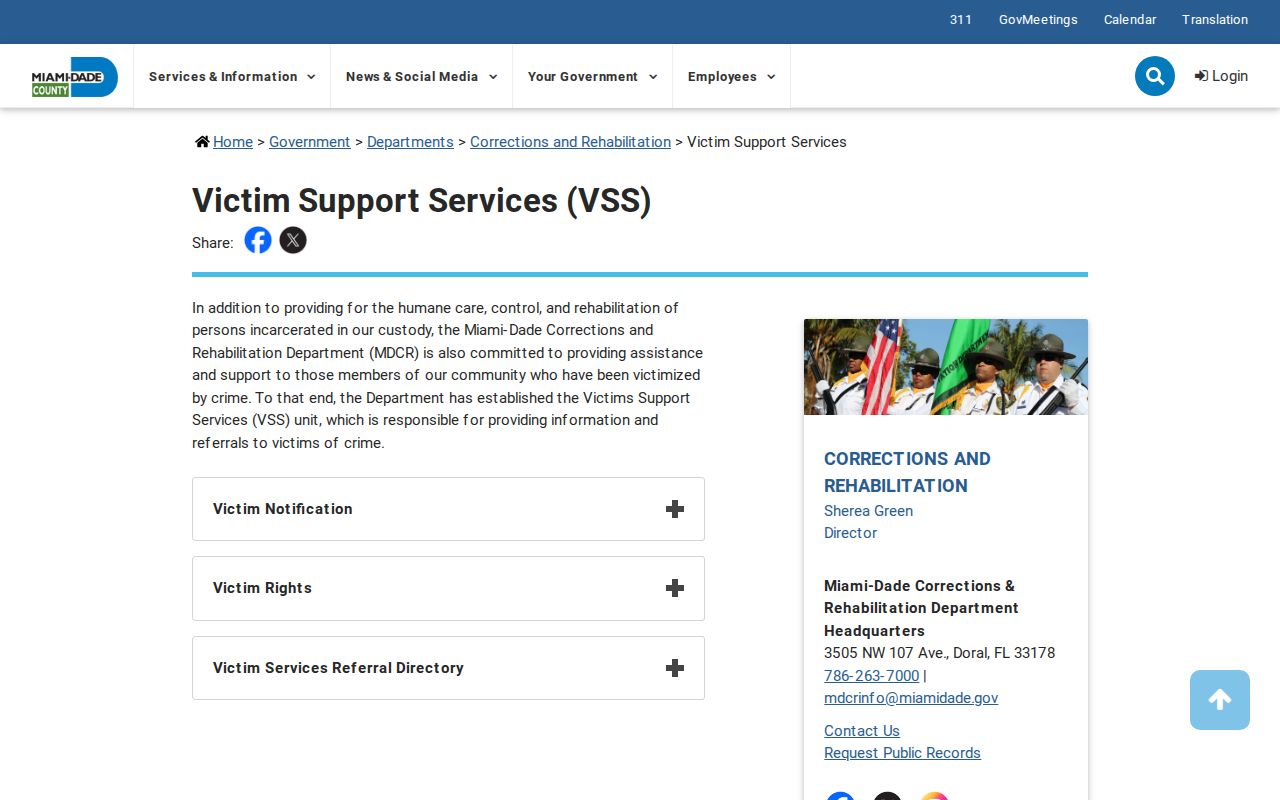
The county layer adds language, code, and registration-management details that a plain VINELink portal link does not show.
Miami-Dade VINE Status Terms
Custody and supervision terms should be kept separate when reading an alert. A VINE event describes the reporting agency's status. The event may not describe the full legal posture, the remaining court case, or supervision by another office.
- Release
- The reporting agency says its custody ended. Follow up to distinguish community return from transfer.
- Transfer
- The person moves between facilities or custodians and may remain confined.
- Out to court
- A temporary custody event tied to court, not a discharge.
- Supervision
- Community-based legal oversight that can continue after physical jail or prison release.
- Discharge
- The end of a defined custody or supervision term under the controlling agency record.
Read the person, agency, and event together. Then use the originating office's release or supervision record for a lasting account.
Miami-Dade VINELink Custody Differences
A Miami-Dade jail record and an FDC prison record can both appear through Florida VINE, but they describe different systems. MDCR records short-term county detention, local bookings, bond processing, court-ordered pretrial release, monitored release, and county transfers. FDC records people received into the state corrections system. A Miami-Dade court case does not make a county-only detainee an FDC inmate.
The correct follow-up depends on the reporting agency in the VINELink result. When MDCR reports release, ask its Release Unit whether the person returned to the community or entered another custodian's care. When FDC reports release, read the statewide Inmate Release Information record for Release Date and Date Out-Custody. Then search Supervised Population because probation, parole, conditional release, or other community corrections status can continue.
| VINELink reporting source | Meaning and follow-up |
|---|---|
| Miami-Dade Corrections | County custody changed. Confirm the release transaction with MDCR and the court context with the Clerk. |
| Florida Department of Corrections | State prison or corrections status changed. Check FDC release and supervision records. |
| Another Florida county jail | That county supplied the event. Contact its jail or records custodian rather than MDCR. |
| No Florida VINE record | Check spelling and identifiers, then use the actual county, FDC, BOP, or ICE locator. |
This agency distinction also affects scheduled dates. A future date on a sentenced FDC record can change as sentences, credit, gain time, detainers, or release mechanisms are recalculated. A person held before trial in Miami-Dade may have no fixed release date at all. VINELink should not turn an estimate into a promise.
Miami-Dade Release Alert Delivery
Phone, text, and email alerts behave differently. Florida's phone process repeats calls until the chosen four-digit PIN acknowledges receipt. Text and email notices do not repeat. A direct number and an address checked often make the notice more likely to be seen. Contact information should be updated through the Miami-Dade registration lookup when it changes.
Electronic notice is also distinct from certified mail. Miami-Dade's local page presents both options because notification needs can differ. The county's six-digit management code lasts 30 minutes, while the four-digit phone PIN acknowledges an automated call. Those codes serve separate tasks and should not be confused.
A missed message does not prove that custody stayed the same. Search the matching record again, contact VINE support for registration issues, and verify the event through MDCR or FDC. For urgent personal safety concerns, follow an existing safety plan and contact the proper public-safety office rather than waiting for an automated update.